DSIP research: sleep, hormones and phospho DSIP
The papers scatter into several lines of inquiry. A change in one measurement often leaves the next question open.
Human sleep studies
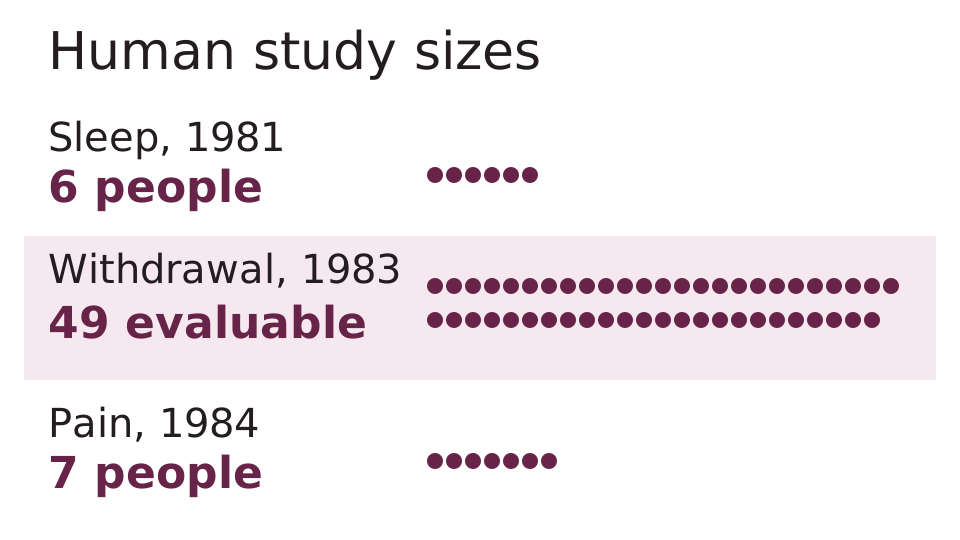
The 1981 sleep experiment involved six middle-aged adults with chronic insomnia. Researchers gave synthetic DSIP intravenously at 25 nmol/kg. Sleep lasted longer, had fewer interruptions and included slightly more REM sleep, with no daytime sedation reported. The sleep-promoting effect appeared in the second hour; the first hour brought slight arousal.
There is a result here worth recording carefully. I cannot turn six participants into a dependable account of how DSIP affects people generally, especially when the 2006 review judged the wider sleep evidence weak and inconsistently documented. The positive study and that appraisal both need room.
The small scale also runs through the old pain and withdrawal reports. The figure counts participants in three human papers; it says nothing about whether DSIP caused their outcomes.
ACTH measurements
In a 1989 experiment in men, ACTH-like immunoreactivity fell for at least three hours after intravenous DSIP. Cortisol was unaffected and followed its normal daily decline. ACTH is the pituitary signal that stimulates cortisol production, so the unchanged cortisol result is essential to understanding what was measured.
I would record the ACTH change with cortisol’s unchanged response beside it. “Lower stress” goes beyond those measurements. The paper gives a selective laboratory finding, and the broader research record includes failures to reproduce hormone effects. Rat experiments also reported growth-hormone release, while studies in women found no growth-hormone or prolactin response. The species and the hormone both matter.
Withdrawal and chronic pain
An open pilot in alcohol or opiate withdrawal reported a beneficial response in 48 of 49 evaluable patients after intravenous DSIP. Its authors proposed activity at opioid receptors. A chronic-pain pilot reported pain reduction in six of seven patients, alongside reduced depressive symptoms.
Both reports were small and lacked a comparable control group. Their response counts describe what those teams observed; they cannot by themselves establish the cause of the improvement. The later withdrawal report named headache as the main side effect.
The opioid explanation was a hypothesis. A subsequent experiment pursued it somewhere much narrower than a clinical ward.
Rat brainstem slices
In the 1989 rat-tissue experiment, DSIP stimulated release of immunoreactive Met-enkephalin from lower-brainstem slices. Met-enkephalin is an opioid peptide made by the body. The same study found no binding activity at the opioid-receptor subtypes tested and interpreted the action as indirect.
This is the kind of correction in scale that I appreciate: a broad proposed explanation became a specific tissue experiment. It leaves a useful mechanistic lead, with the animal and in-vitro setting attached. Demonstrating release from rat tissue cannot establish pain relief or withdrawal treatment in humans.
Phospho DSIP and a newer fusion peptide
Phospho DSIP, or DSIP-P, denotes a phosphorylated form with a phosphate group attached. It needs to be distinguished from both original DSIP and the engineered fusion peptide in the 2024 mouse insomnia study. The fusion joined DSIP to another peptide intended to improve passage across the blood-brain barrier, the selective boundary between circulating blood and brain tissue.
In mice with PCPA-induced insomnia, that fusion peptide reduced average daily wakefulness from roughly 720 minutes to 500 minutes, about 31%, and outperformed unmodified DSIP. It also produced behavioural and neuronal findings in those mice. These results concern the engineered molecule in an animal model.
The older review already emphasised stronger effects from structural analogues. I regard the newer study as another reason to record exactly which molecule was tested. It supplies no human trial of the original peptide or of phospho DSIP.
Mouse ageing and rat antioxidant research
The 2003 study of a DSIP-containing preparation in female SHR mice reported a 24.1% increase in maximum lifespan and a 2.6-fold reduction in spontaneous tumour incidence. Maximum lifespan is the outcome specified in that paper; it cannot be silently replaced with an average lifespan claim.
Much of this work came from related research groups, leaving replication by other groups important. The 2011 antioxidant study used ageing rats and reported changes in markers of oxidative damage and antioxidant defence. That provides a proposed biological explanation to investigate. Neither paper establishes longer human life.
DSIP safety data
The human work consists largely of small, short studies, leaving long-term safety and human pharmacokinetics unresolved. The 2006 appraisal of the field also leaves the receptor, gene and precursor unidentified. Those gaps limit attempts to predict interactions or repeat exposure.
The side-effects page brings together the reported short-term problems and the missing safety studies. The dosage record gives the context of study amounts and routes, without converting them into a course of use.